A woman herds goats across a barren field. The Karnali area of Nepal in the mid western hills and along the Chinese border is one of the most food insecure regions in Asia. The World Food Program estimate 75% of the children in the district have stunted growth and up to 50% are malnourished. With an expanding population and drying climate the challenge ahead is significant. 23/04/2011, Karnali, Nepal.
Flags fly above Dangibara. The Karnali area of Nepal in the mid western hills and along the Chinese border is one of the most food insecure regions in Asia. The World Food Program estimate 75% of the children in the district have stunted growth and up to 50% are malnourished. With an expanding population and drying climate the challenge ahead is significant. 23/04/2011, Karnali, Nepal.
A boy ploughs a field on the road to Dunai. The Karnali area of Nepal in the mid western hills and along the Chinese border is one of the most food insecure regions in Asia. The World Food Program estimate 75% of the children in the district have stunted growth and up to 50% are malnourished. With an expanding population and drying climate the challenge ahead is significant. 23/04/2011, Karnali, Nepal.
Loaded mules carry sacks of rice. The Karnali area of Nepal in the mid western hills and along the Chinese border is one of the most food insecure regions in Asia. The World Food Program estimate 75% of the children in the district have stunted growth and up to 50% are malnourished. With an expanding population and drying climate the challenge ahead is significant. 23/04/2011, Karnali, Nepal.
A woman with a baby on her back turns and looks at the photographer. The Karnali area of Nepal in the mid western hills and along the Chinese border is one of the most food insecure regions in Asia. The World Food Program estimate 75% of the children in the district have stunted growth and up to 50% are malnourished. With an expanding population and drying climate the challenge ahead is significant. 23/04/2011, Karnali, Nepal.
Corn fields on the edge of Dunai. The Karnali area of Nepal in the mid western hills and along the Chinese border is one of the most food insecure regions in Asia. The World Food Program estimate 75% of the children in the district have stunted growth and up to 50% are malnourished. With an expanding population and drying climate the challenge ahead is significant. 24/04/2011, Karnali, Nepal.
A girl dressed in red fills a jar with water. The Karnali area of Nepal in the mid western hills and along the Chinese border is one of the most food insecure regions in Asia. The World Food Program estimate 75% of the children in the district have stunted growth and up to 50% are malnourished. With an expanding population and drying climate the challenge ahead is significant. 24/04/2011, Karnali, Nepal.
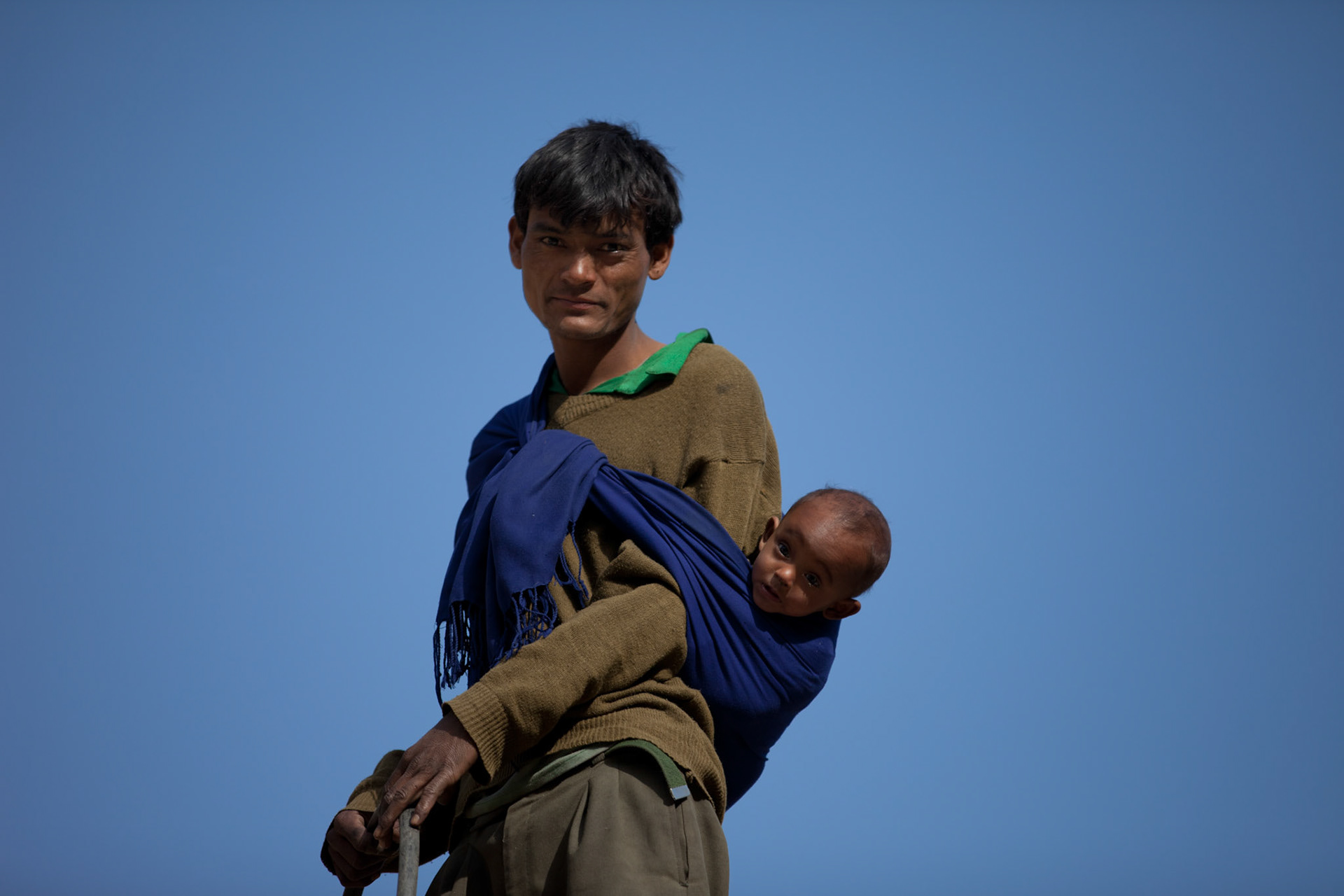
A man with a baby on his back stands with a blue sky behind. The Karnali area of Nepal in the mid western hills and along the Chinese border is one of the most food insecure regions in Asia. The World Food Program estimate 75% of the children in the district have stunted growth and up to 50% are malnourished. With an expanding population and drying climate the challenge ahead is significant. 24/04/2011, Karnali, Nepal.
View of the village from above. The Karnali area of Nepal in the mid western hills and along the Chinese border is one of the most food insecure regions in Asia. The World Food Program estimate 75% of the children in the district have stunted growth and up to 50% are malnourished. With an expanding population and drying climate the challenge ahead is significant. 24/04/2011, Karnali, Nepal.
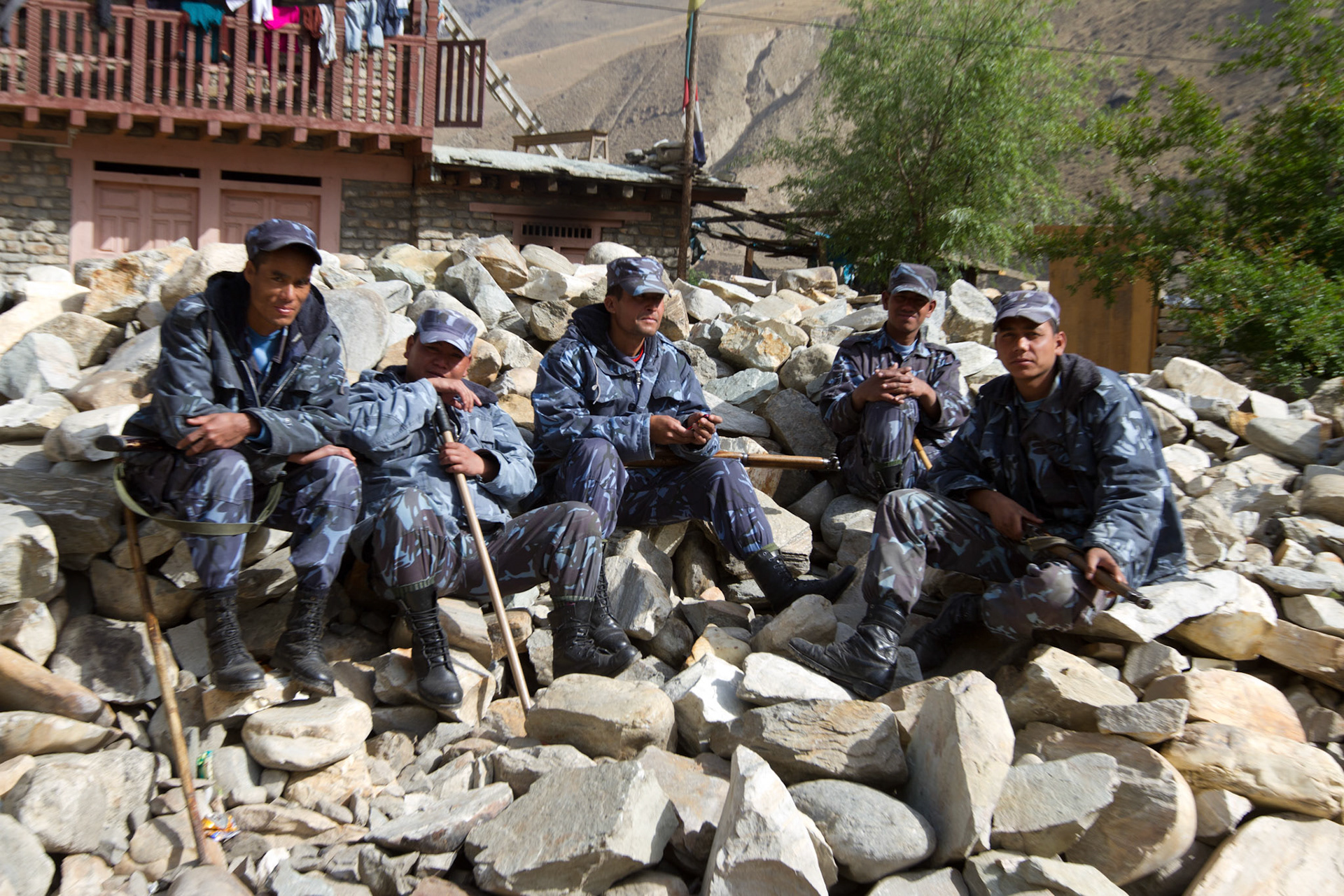
Armed police sit on rocks at the edge of Dunai. The Karnali area of Nepal in the mid western hills and along the Chinese border is one of the most food insecure regions in Asia. The World Food Program estimate 75% of the children in the district have stunted growth and up to 50% are malnourished. With an expanding population and drying climate the challenge ahead is significant. 24/04/2011, Dunai, Nepal.
A man holds out a Yasagumba worm. The worms are collected in the mountains and sold to Chinese merchants for natural health product. The Karnali area of Nepal in the mid western hills and along the Chinese border is one of the most food insecure regions in Asia. The World Food Program estimate 75% of the children in the district have stunted growth and up to 50% are malnourished. With an expanding population and drying climate the challenge ahead is significant. 24/04/2011, Dunai, Nepal.
Children practice a dance and a song in Dunai for National day celebrations. The Karnali area of Nepal in the mid western hills and along the Chinese border is one of the most food insecure regions in Asia. The World Food Program estimate 75% of the children in the district have stunted growth and up to 50% are malnourished. With an expanding population and drying climate the challenge ahead is significant. 24/04/2011, Dunai, Nepal.
A woman holds dried wheat in her hands on the road to Juphal. The Karnali area of Nepal in the mid western hills and along the Chinese border is one of the most food insecure regions in Asia. The World Food Program estimate 75% of the children in the district have stunted growth and up to 50% are malnourished. With an expanding population and drying climate the challenge ahead is significant. 24/04/2011, Karnali, Nepal.
Two girls look at the photographer one with a red head scarf. The Karnali area of Nepal in the mid western hills and along the Chinese border is one of the most food insecure regions in Asia. The World Food Program estimate 75% of the children in the district have stunted growth and up to 50% are malnourished. With an expanding population and drying climate the challenge ahead is significant. 24/04/2011, Karnali, Nepal.
Women manually grind corn to flour. The Karnali area of Nepal in the mid western hills and along the Chinese border is one of the most food insecure regions in Asia. The World Food Program estimate 75% of the children in the district have stunted growth and up to 50% are malnourished. With an expanding population and drying climate the challenge ahead is significant. 24/04/2011, Karnali, Nepal.
A young girl wraps herself in a blanket and looks at the photographer. The Karnali area of Nepal in the mid western hills and along the Chinese border is one of the most food insecure regions in Asia. The World Food Program estimate 75% of the children in the district have stunted growth and up to 50% are malnourished. With an expanding population and drying climate the challenge ahead is significant. 24/04/2011, Karnali, Nepal.
A man smokes a pipe in Dangibara. The Karnali area of Nepal in the mid western hills and along the Chinese border is one of the most food insecure regions in Asia. The World Food Program estimate 75% of the children in the district have stunted growth and up to 50% are malnourished. With an expanding population and drying climate the challenge ahead is significant. 24/04/2011, Karnali, Nepal.
Dantakumari Dangi from Dangibara home. The Karnali area of Nepal in the mid western hills and along the Chinese border is one of the most food insecure regions in Asia. The World Food Program estimate 75% of the children in the district have stunted growth and up to 50% are malnourished. With an expanding population and drying climate the challenge ahead is significant. 25/04/2011, Karnali, Nepal.
A woman in red carries a load in front of the Mukuteshwor mountains rise to 7,000 feet. The Karnali area of Nepal in the mid western hills and along the Chinese border is one of the most food insecure regions in Asia. The World Food Program estimate 75% of the children in the district have stunted growth and up to 50% are malnourished. With an expanding population and drying climate the challenge ahead is significant. 23/04/2011, Karnali, Nepal.
A child mimics the photographer on the rooftops in Dangibara. The Karnali area of Nepal in the mid western hills and along the Chinese border is one of the most food insecure regions in Asia. The World Food Program estimate 75% of the children in the district have stunted growth and up to 50% are malnourished. With an expanding population and drying climate the challenge ahead is significant. 24/04/2011, Karnali, Nepal.